This is a recipe that my family always made together for the holidays every year.
Ingredients:
1.5 cups butter (340 grams)
1 cup brown sugar
3.5 cups sifted flour
2 egg yolks (plus egg whites for dipping)
1 tsp. vanilla
Chopped pecans
Raspberry jam
Cream together the butter and sugar. Add egg yolks, then add flour. Put dough in the refrigerator for a day. Roll in balls the size of a walnut. Dip in slightly beaten egg whites, then roll in pecan nuts. Leave a slight imprint in the top (but not too deep). Put on lower shelf of oven at 375 degrees F (190 degrees C) for about 10 minutes. Take out of oven and add raspberry jam. Put back in oven for another 10-15 minutes on middle shelf.
Monday, December 10, 2012

Monday, February 27, 2012
Rice cooker corn bread
Having lived in the south for half of my life, corn bread is something that I occasionally get a craving for. I'm scared to make it in our tiny Japanese oven, because it burns things on top and under-cooks the bottom. So I decided to give it a try in our fancy new rice cooker (a wedding gift!) using the "bake" function.
200 g yellow cornmeal (1.5 cups)
100 g flour (1 cup)
1/2 cup sugar (or 1/4 cup brown sugar, packed)
1 teaspoon salt
1/2 teaspoon baking soda
2 eggs
1 cup plain yogurt
1/2 cup milk
1/4 cup butter – melted
Grease the bowl of the rice cooker. In a medium bowl, mix together the dry ingredients. In a separate bowl, whisk the eggs, yogurt and milk together. Add to the dry ingredients, stirring only until moist. Drizzle in the butter, stir slightly, and pour the cornbread batter into the greased rice cooker bowl. Put the bowl into the rice cooker and set on "bake." (If your rice cooker doesn't have a "bake" function, just press "cook" like you would for rice and make sure it stays on "cook" for about 40 minutes). Carefully remove the cornbread from the bowl to a plate to cool slightly. Cut cornbread into pieces and serve warm.

Sunday, December 11, 2011
Spanakopita!

Spanakopita is not as difficult to make as it looks, but phyllo dough could be difficult to get in Japan.
I got it in a online shop called "The Meat Guy" (what a great name!).
http://www.themeatguy.jp/
Search for "Fillo Pastry".
Make sure to drain spinach after boiling.
The result is crispy outside, creamy and cheesy inside!


Monday, July 18, 2011
Home Made Bread


Okonomiyaki & Negiyaki


Okonomiyaki(savory pancake with whatever you like in it) is a famous snack food which you can make quite easily. Basically you just mix batter with veggies, meat or seafood of your choice and fry on the not plate. You can even put cheese and mochi (rice cake) in it.
We encountered the best Okonomiyaki when we visited Osaka.That is called Negiyaki(savory spring onion pancake).
They look alike but Negiyaki has such a smooth taste and melts in your mouth.
So I've tried to recreate the taste at home.
Saturday, May 28, 2011
Ganmodoki and Daikon Radish Stew
 Might not look great in the photo but this was a piece of success that we loved at the dinner.
Ganmodoki is a fried tofu fritter that is soft and absorbs the broth very well when it's boiled.
Once it absorbs the broth, it becomes juicy and succulent.
Wednesday, April 13, 2011
Strawberry Daifuku
 Daifuku is a sort of rice cake but it's got stuff inside and my favorite one has a whole strawberry in it. How sweet. There are actually lots of places your can find strawberry daifuku but this one from Yamato-ya (大和や) near Keio Inokashira line Kugayama station is unprecedented.
Tuesday, April 12, 2011
Favorite Spread
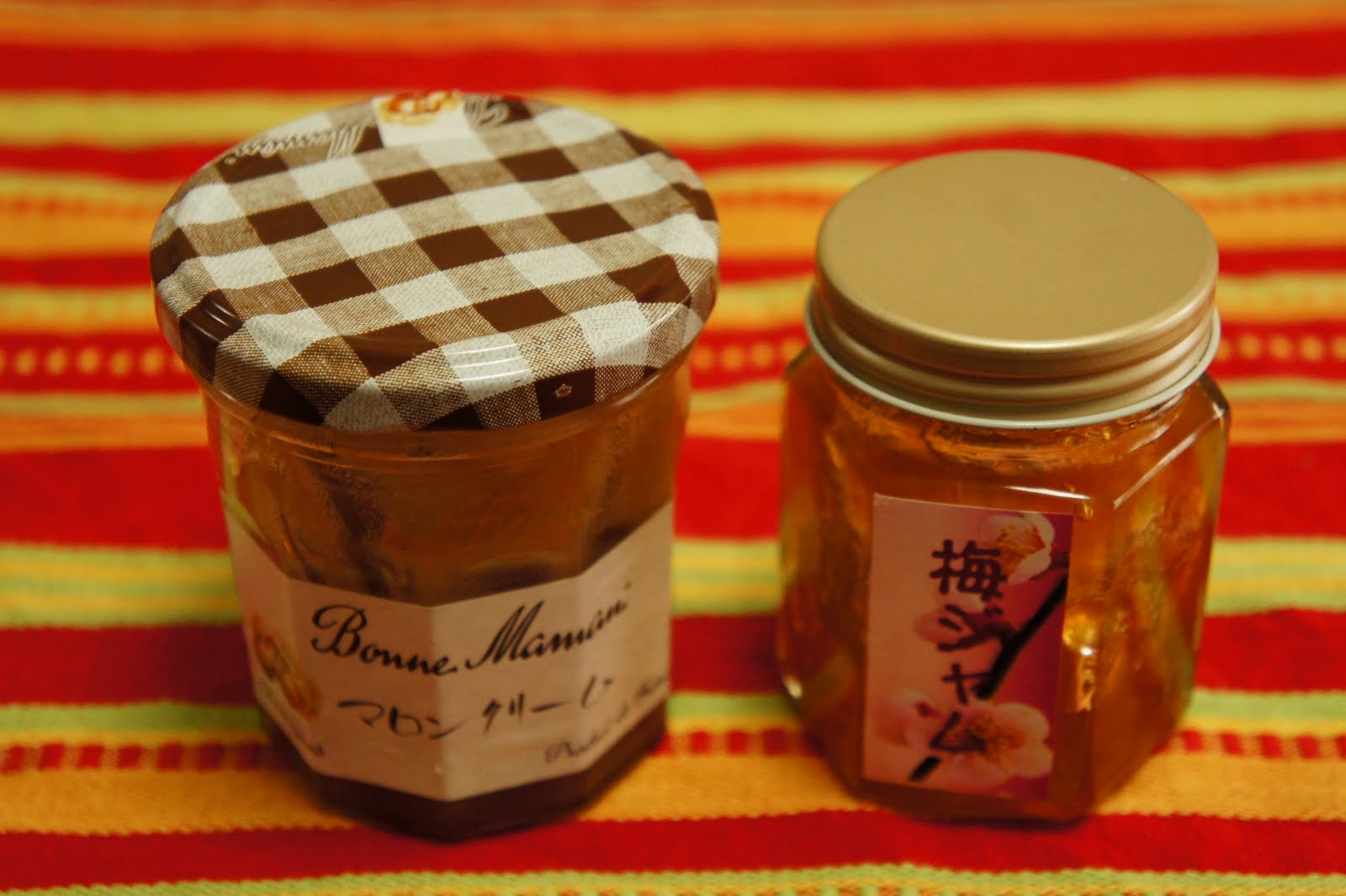 My recent hits, Maroon(chestnuts) Cream and 梅(plum) Jam. It's pretty organic and great spread on toasts, pan cakes, etc.
Sunday, April 10, 2011
Curry Take-away
 Lamb curry with saffron rice take-away from "PANAS".
Whenever I miss curry take-aways I used to do back in Britain, I would hit this place.
To tell you the truth, my stomach wasn't great before I ate this curry. Curiously enough, my stomach got healed after I ate it!
Look what just arrived!

Fresh veggies from 加津佐 (Kazusa)! Kazusa is the southernmost part of Minamishimabara city in Nagasaki. It is most famous for potatoes and onions, and it was my home for 2 years. That place will always be special to me!
Saturday, April 09, 2011
Sandwich Kit for Picnic
 When picnic in the park, I often make my own sandwich kit. It's handy and you can make delicious sandwiches everywhere. Freshly baked bread is the key. Fortunately in Tokyo, there is a local bakery in almost any towns and I can easily find freshly baked breads. Grab a few slices of bread, tomato, lettuce, pastrami and anything you like to sandwich with, and pack them with butter, mayonnaise, ketchup, or any sauces you like. don't forget to take disposable knives and plates. As cherry blossom is in full bloom in the park, a piece of my own sandwich adds a relish to the picnic.
Wednesday, April 06, 2011
Blueberry Muffins in 15 mins
 Not exactly 15 minutes to be ready to eat but basically all you have to do is mixing up all the ingredients, fill up the cups, and place them in Oven. Depending on the ability of your oven it would take an hour or so but I still made it with my not-so-great microwave oven so you should be fine with your oven.
Monday, April 04, 2011
Best Mexican in Tokyo
 People say Tokyo is a dead city for good Mexican but I always enjoy home made tacos as it's easy and fun to make. Preferably choose hard taco shells, get nice pieces of beef in the nearest super market and mince it up with our new food processor, or just get a package of mince meat.

 Fry the mince with beans and any vegetable you like. Fill up the shell with the fried meat and top with grated cheese and taco sauce which you can find in any super market.

Sunday, April 03, 2011
Fami-Res

A restaurant chain called Gasto(ガスト) has one of the biggest indulgence of "fami-res" (family restaurant). the reason why I crave for going there sometimes.
Monday, March 28, 2011


Thursday, January 27, 2011
The Un-peanut sauce
When you think about it, processed peanut butter is gross. In addition to the added sugar and chemicals, it's also quite unsanitary. A former colleague of mine who used to work in a food factory wouldn't eat peanut butter because there was actually a limit to the amount of RAT FECES that could be present in a final batch. It was in the parts per million, but it still gives me pause when I'm craving it. Sometimes I satiate the urge with a good organic brand, but a jar of the good stuff in Japan will set you back about $12 US.
So, when craving a good peanut sauce, I figured out a way to make it using a ubiquitous local ingredient: the sesame seed. It's probably my favorite ingredient because it's so versatile: it can be sprinkled, crushed, or ground into a paste. For this recipe, I used Neri-goma, which is liquidized sesame seeds and is somewhat similar to Tahini. It's available in easy-to-use tubes in white or black.

The black is great if you want to make a beautiful goma pudding like this one:

I like neri-goma because there's only one ingredient listed: sesame seeds.
Sesame sauce
Ingredients:
3 Tablespoons Neri-goma (white)
3 Tablespoons soy sauce
2 Tablespoons rice vinegar
1 Tablespoon brown sugar or Tenzai (beet) sugar
1 clove of garlic, grated
1 teaspoon fresh ginger, grated
a pinch of red pepper flakes
1 Tablespoon of water
Mix all of the ingredients together in a bowl. It makes a really creamy, delicious sauce that can be added to a stir-fry at the end. You can also put it on noodles, as a dipping sauce...the possibilities are endless!
Thursday, April 22, 2010
Cream of Burdock (ごぼう) Soup
I invented this recipe today because I really wanted a creamy soup using Japanese ingredients. It's vegan and it will fill you up!

Ingredients:
1 onion
2 cloves garlic
2 long sticks burdock, cleaned, peeled and cut into 2-inch pieces
1 tablespoon vegan margarine
2 cups vegetable stock
1/4 cup flour
2 cups soy milk (or a bit more to taste)
2 tablespoons soy sauce
a bit of fresh mitsuba
a sprinkle of black pepper
Directions:
Heat margarine in a saucepan until bubbly. Add onions and garlic, saute until soft. Add burdock and saute a bit more. Add vegetable stock and bring to a boil. Cook until the burdock is soft, about 20 minutes. Add flour and saute for a few minutes. Add soy milk and soy sauce and blend until smooth. Sprinkle with pepper and garnish with mitsuba.
Tuesday, March 16, 2010
Dried shiitakes are surprisingly meaty
Last night we made kenchinjiro, which is a kind of miso stew. As Y dug in, he remarked, "Wow...this shiitake is surprisingly meaty!" I couldn't agree more. Dried shiitakes have a much stronger taste than fresh ones for some reason. And as a bonus, you can use the soaking water for soup stock!
Monday, March 01, 2010
The best according to Erica
Bananas sauteed in butter + maple syrup + walnuts sprinkled on top = the best dessert ever!
Sunday, October 18, 2009
Japan is not so bad in terms of glutenization
E wrote that MSG, or just "gluten" is in pretty much all packaged food in Japan, and most of meals you have in restaurants, which is not true.
If I call the situation that consuming gluten is becoming more common "glutenization," Japan is getting over it. I should say.
More and more restaurants, or any places which serve food make their menu without gluten, and advertize that by putting a sign in front of the restaurant saying something like "using fresh and organic veggies."
It's fairly easy to find food without gluten in Tokyo. In いなか (rural area) in Japan, it's even easier to find food without gluten because rural areas are normally rich in locally grown food. They try hard to sell their own products so they advertize how healthy and safe the food is. Gluten is not a good idea for them to use.
About packaged food, like TV dinner, frozen food, pasta sources, dressing, spices, etc, etc... like E said the "無添加(no added chemicals)" is not the majority of the products available in stores yet but you can find it anywhere in Japan. In fact, it stands out in the food floor because of the big letters on the package.
From my experience, I think that gluten makes your tongue kinda numb. You become less and less sensitive to taste if you keep consuming it, and eventually become unable to tell if it's gluten or something else.
Gluten is such an easy and quick way to season food when you cook, but I'd rather enjoy a different taste every time.
Subscribe to:
Posts (Atom)