The result was amazing and we certainly enjoyed our breakfast of the day with a few slices of freshly baked bread.
Monday, July 18, 2011
Home Made Bread
Okonomiyaki & Negiyaki
Okonomiyaki(savory pancake with whatever you like in it) is a famous snack food which you can make quite easily. Basically you just mix batter with veggies, meat or seafood of your choice and fry on the not plate. You can even put cheese and mochi (rice cake) in it.
We encountered the best Okonomiyaki when we visited Osaka.That is called Negiyaki(savory spring onion pancake).
They look alike but Negiyaki has such a smooth taste and melts in your mouth.
So I've tried to recreate the taste at home.
Saturday, May 28, 2011
Ganmodoki and Daikon Radish Stew
Wednesday, April 13, 2011
Strawberry Daifuku
Tuesday, April 12, 2011
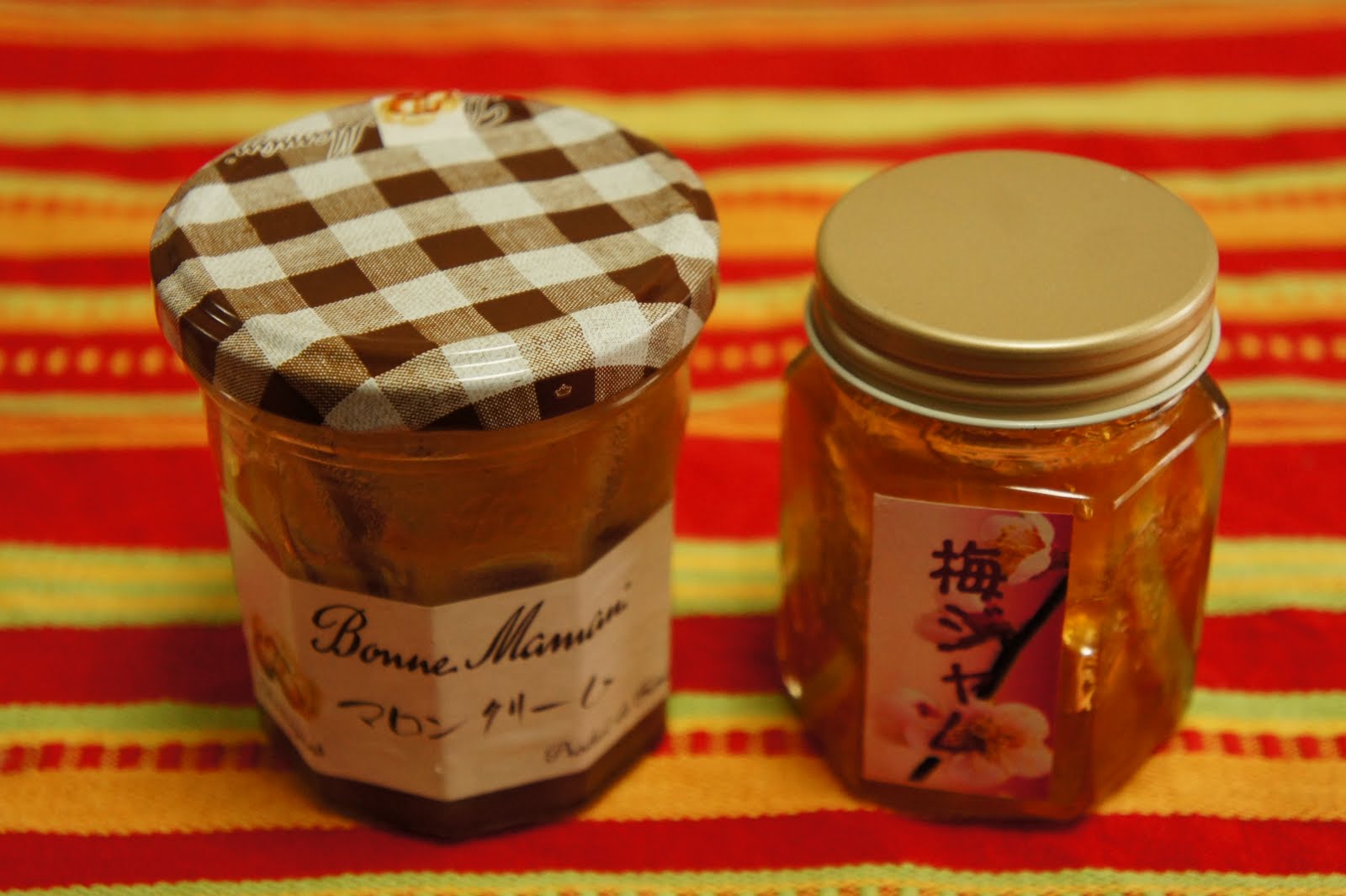
Favorite Spread
Sunday, April 10, 2011
Curry Take-away
Look what just arrived!
Fresh veggies from 加津佐 (Kazusa)! Kazusa is the southernmost part of Minamishimabara city in Nagasaki. It is most famous for potatoes and onions, and it was my home for 2 years. That place will always be special to me!
Saturday, April 09, 2011
Sandwich Kit for Picnic
Wednesday, April 06, 2011
Blueberry Muffins in 15 mins
Monday, April 04, 2011
Best Mexican in Tokyo
Sunday, April 03, 2011
Fami-Res
Monday, March 28, 2011
Thursday, January 27, 2011
The Un-peanut sauce
When you think about it, processed peanut butter is gross. In addition to the added sugar and chemicals, it's also quite unsanitary. A former colleague of mine who used to work in a food factory wouldn't eat peanut butter because there was actually a limit to the amount of RAT FECES that could be present in a final batch. It was in the parts per million, but it still gives me pause when I'm craving it. Sometimes I satiate the urge with a good organic brand, but a jar of the good stuff in Japan will set you back about $12 US.
So, when craving a good peanut sauce, I figured out a way to make it using a ubiquitous local ingredient: the sesame seed. It's probably my favorite ingredient because it's so versatile: it can be sprinkled, crushed, or ground into a paste. For this recipe, I used Neri-goma, which is liquidized sesame seeds and is somewhat similar to Tahini. It's available in easy-to-use tubes in white or black.

The black is great if you want to make a beautiful goma pudding like this one:

I like neri-goma because there's only one ingredient listed: sesame seeds.
Sesame sauce
Ingredients:
3 Tablespoons Neri-goma (white)
3 Tablespoons soy sauce
2 Tablespoons rice vinegar
1 Tablespoon brown sugar or Tenzai (beet) sugar
1 clove of garlic, grated
1 teaspoon fresh ginger, grated
a pinch of red pepper flakes
1 Tablespoon of water
Mix all of the ingredients together in a bowl. It makes a really creamy, delicious sauce that can be added to a stir-fry at the end. You can also put it on noodles, as a dipping sauce...the possibilities are endless!
So, when craving a good peanut sauce, I figured out a way to make it using a ubiquitous local ingredient: the sesame seed. It's probably my favorite ingredient because it's so versatile: it can be sprinkled, crushed, or ground into a paste. For this recipe, I used Neri-goma, which is liquidized sesame seeds and is somewhat similar to Tahini. It's available in easy-to-use tubes in white or black.

The black is great if you want to make a beautiful goma pudding like this one:

I like neri-goma because there's only one ingredient listed: sesame seeds.
Sesame sauce
Ingredients:
3 Tablespoons Neri-goma (white)
3 Tablespoons soy sauce
2 Tablespoons rice vinegar
1 Tablespoon brown sugar or Tenzai (beet) sugar
1 clove of garlic, grated
1 teaspoon fresh ginger, grated
a pinch of red pepper flakes
1 Tablespoon of water
Mix all of the ingredients together in a bowl. It makes a really creamy, delicious sauce that can be added to a stir-fry at the end. You can also put it on noodles, as a dipping sauce...the possibilities are endless!
Thursday, April 22, 2010
Cream of Burdock (ごぼう) Soup
I invented this recipe today because I really wanted a creamy soup using Japanese ingredients. It's vegan and it will fill you up!

Ingredients:
1 onion
2 cloves garlic
2 long sticks burdock, cleaned, peeled and cut into 2-inch pieces
1 tablespoon vegan margarine
2 cups vegetable stock
1/4 cup flour
2 cups soy milk (or a bit more to taste)
2 tablespoons soy sauce
a bit of fresh mitsuba
a sprinkle of black pepper
Directions:
Heat margarine in a saucepan until bubbly. Add onions and garlic, saute until soft. Add burdock and saute a bit more. Add vegetable stock and bring to a boil. Cook until the burdock is soft, about 20 minutes. Add flour and saute for a few minutes. Add soy milk and soy sauce and blend until smooth. Sprinkle with pepper and garnish with mitsuba.
Ingredients:
1 onion
2 cloves garlic
2 long sticks burdock, cleaned, peeled and cut into 2-inch pieces
1 tablespoon vegan margarine
2 cups vegetable stock
1/4 cup flour
2 cups soy milk (or a bit more to taste)
2 tablespoons soy sauce
a bit of fresh mitsuba
a sprinkle of black pepper
Directions:
Heat margarine in a saucepan until bubbly. Add onions and garlic, saute until soft. Add burdock and saute a bit more. Add vegetable stock and bring to a boil. Cook until the burdock is soft, about 20 minutes. Add flour and saute for a few minutes. Add soy milk and soy sauce and blend until smooth. Sprinkle with pepper and garnish with mitsuba.
Tuesday, March 16, 2010
Dried shiitakes are surprisingly meaty
Last night we made kenchinjiro, which is a kind of miso stew. As Y dug in, he remarked, "Wow...this shiitake is surprisingly meaty!" I couldn't agree more. Dried shiitakes have a much stronger taste than fresh ones for some reason. And as a bonus, you can use the soaking water for soup stock!
Monday, March 01, 2010
The best according to Erica
Bananas sauteed in butter + maple syrup + walnuts sprinkled on top = the best dessert ever!
Sunday, October 18, 2009
Japan is not so bad in terms of glutenization
E wrote that MSG, or just "gluten" is in pretty much all packaged food in Japan, and most of meals you have in restaurants, which is not true.
If I call the situation that consuming gluten is becoming more common "glutenization," Japan is getting over it. I should say.
More and more restaurants, or any places which serve food make their menu without gluten, and advertize that by putting a sign in front of the restaurant saying something like "using fresh and organic veggies."
It's fairly easy to find food without gluten in Tokyo. In いなか (rural area) in Japan, it's even easier to find food without gluten because rural areas are normally rich in locally grown food. They try hard to sell their own products so they advertize how healthy and safe the food is. Gluten is not a good idea for them to use.
About packaged food, like TV dinner, frozen food, pasta sources, dressing, spices, etc, etc... like E said the "無添加(no added chemicals)" is not the majority of the products available in stores yet but you can find it anywhere in Japan. In fact, it stands out in the food floor because of the big letters on the package.
From my experience, I think that gluten makes your tongue kinda numb. You become less and less sensitive to taste if you keep consuming it, and eventually become unable to tell if it's gluten or something else.
Gluten is such an easy and quick way to season food when you cook, but I'd rather enjoy a different taste every time.
If I call the situation that consuming gluten is becoming more common "glutenization," Japan is getting over it. I should say.
More and more restaurants, or any places which serve food make their menu without gluten, and advertize that by putting a sign in front of the restaurant saying something like "using fresh and organic veggies."
It's fairly easy to find food without gluten in Tokyo. In いなか (rural area) in Japan, it's even easier to find food without gluten because rural areas are normally rich in locally grown food. They try hard to sell their own products so they advertize how healthy and safe the food is. Gluten is not a good idea for them to use.
About packaged food, like TV dinner, frozen food, pasta sources, dressing, spices, etc, etc... like E said the "無添加(no added chemicals)" is not the majority of the products available in stores yet but you can find it anywhere in Japan. In fact, it stands out in the food floor because of the big letters on the package.
From my experience, I think that gluten makes your tongue kinda numb. You become less and less sensitive to taste if you keep consuming it, and eventually become unable to tell if it's gluten or something else.
Gluten is such an easy and quick way to season food when you cook, but I'd rather enjoy a different taste every time.
Labels:
cooking,
eating-out,
food,
gluten,
MSG,
restautant,
shopping
Thursday, October 08, 2009
ごぼう (Gobou) is related to the artichoke
Gobou (known as burdock in the west) is a root vegetable found all over the world but only eaten in Japan and other Asian countries. Maybe it's the unappealing twig-like appearance that turns people off (E didn't want to touch it with a 10-foot pole for a looong time) but when you peel away the dirt there's a delicious whitish-grey flesh underneath. It is also high-fiber and low-calorie, and is often eaten with macrobiotic diets.
E made きんぴら (kinpira) using this recipe...but she went a little too happy on the spices and now our mouths are on fire.

In conclusion, E would make out with a gobou, but then Y would be jealous. :o
E made きんぴら (kinpira) using this recipe...but she went a little too happy on the spices and now our mouths are on fire.
In conclusion, E would make out with a gobou, but then Y would be jealous. :o
Monday, October 05, 2009
無添加 (Mu-ten-ka)
Did you know that it is very difficult to find any food in Japan without added MSG? If you eat in non-organic restaurants, chances are you are consuming MSG with every meal. The only way to avoid it is by cooking your own food...or so E thought.
It turns out that almost all packaged food contains MSG as well!
...but not all packaged food. Y taught E the kanji for mu-ten-ka, which means "no added chemicals." Look for it on packages of soup stock (dashi), miso, or pretty much anything in the grocery store.
It turns out that almost all packaged food contains MSG as well!
...but not all packaged food. Y taught E the kanji for mu-ten-ka, which means "no added chemicals." Look for it on packages of soup stock (dashi), miso, or pretty much anything in the grocery store.
This is what happens when you don't have an oven
E made rice cooker zucchini bread!

It's actually very easy: all you need to do is put any recipe for zucchini bread (like this one) into the rice cooker and set on "cook" for about 3 hours. E used half whole-wheat flour and reduced the sugar. おいしかった!
Subscribe to:
Comments (Atom)